Department of Information Technology
Shaping the digital future through innovation in software development and IT solutions
Our Programs CurriculumWelcome to Information Technology Department
The Department of Information Technology at Government Polytechnic Nainital is committed to providing quality education in IT and computer science. Established in 2001, our department has been at the forefront of producing skilled IT professionals who contribute significantly to the software industry and digital transformation.
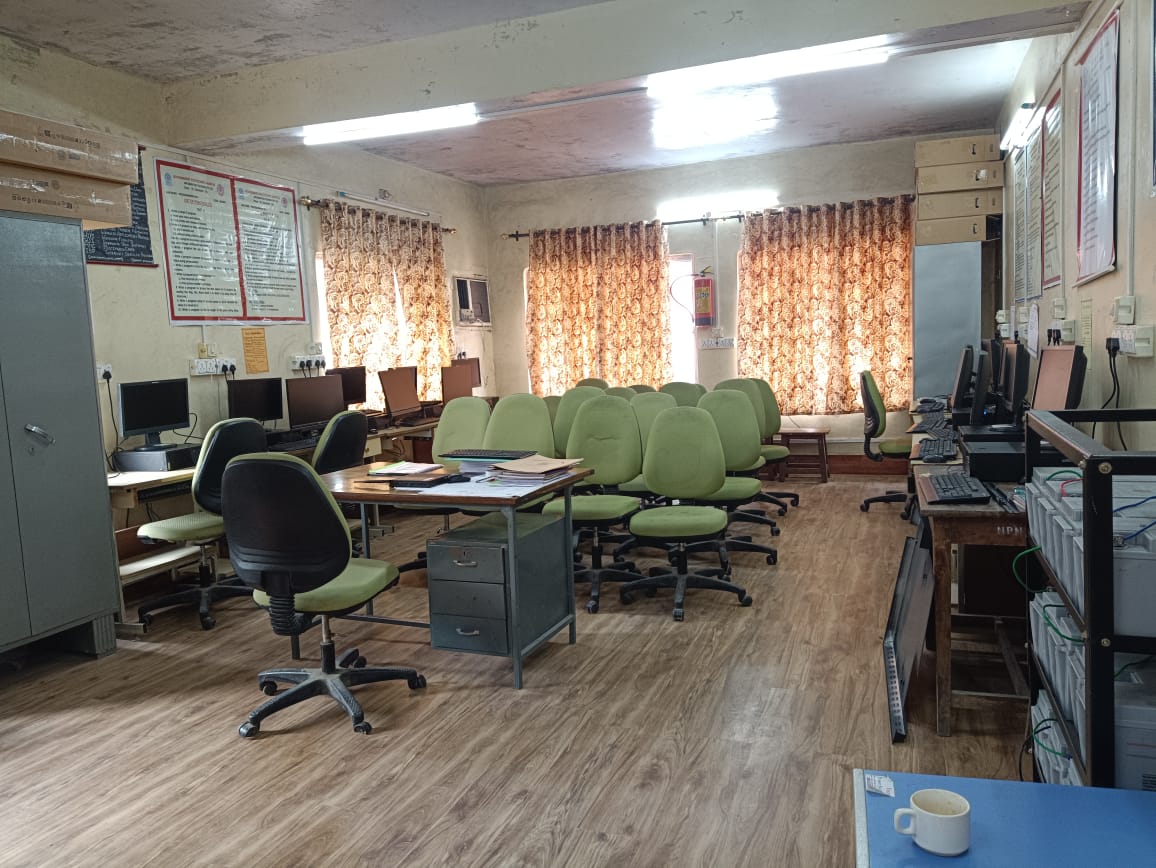
Our curriculum is designed to meet the evolving demands of the IT industry, with a focus on software development, web technologies, and database management. We offer state-of-the-art computer labs, experienced faculty, and industry collaborations to ensure our students receive comprehensive education.
Vision & Mission
Our Vision
To be a center of excellence in Information Technology education, fostering innovation, cutting-edge technology, and ethical values to produce globally competent IT professionals who can contribute to the digital transformation of society.
Our Mission
- Provide quality education in IT through industry-relevant curriculum
- Foster research, innovation, and emerging technology practices
- Develop technical and professional skills to meet global standards
- Promote ethical values and innovation in software development
- Establish strong industry-academia collaborations for mutual growth
Our Programs
Diploma in Information Technology
Our 3-year diploma program in Information Technology is designed to provide students with a strong foundation in programming, web development, and database management. The curriculum covers both theoretical concepts and practical applications, preparing students for successful careers in the IT industry.
Career Opportunities
Detailed Curriculum
Our comprehensive 3-year diploma program covers foundational engineering concepts in the first year and specialized IT subjects in subsequent years.
Program Structure
The Diploma in Information Technology is a 3-year program divided into 6 semesters. The first year (Semesters 1 & 2) covers common engineering fundamentals, while the remaining semesters focus on specialized IT subjects.
Subjects:
- English & Communication Skills – I
- Applied Mathematics – I
- Applied Physics – I
- Applied Chemistry – I
- Computer Fundamentals
- Engineering Graphics – I
- General Workshop Practice – I
- General Proficiency, Industrial Exposure
Learning Outcomes:
- Develop communication (listening, speaking, reading, writing) skills
- Apply algebra, trigonometry, derivatives to solve engineering problems
- Understand fundamentals of physics and chemistry applied in engineering
- Gain basics of computer operations and programming
- Learn to create engineering drawings
- Acquire basic workshop and practical technical skills
Subjects:
- English & Communication Skills – II
- Applied Mathematics – II
- Applied Physics – II
- Applied Chemistry – II
- Environmental Science & Energy Management
- Engineering Graphics – II
- General Workshop Practice – II
- General Proficiency, Industrial Exposure
Learning Outcomes:
- Communicate fluently with improved writing, speaking & listening skills
- Apply integration, differential equations, coordinate geometry, statistics in engineering problems
- Understand laws of physics and chemistry in engineering context
- Acquire awareness of environment, energy use, and sustainability
- Improve drawing and modeling skills
- Apply workshop practices in real-world engineering tasks
| Subject | Learning Outcomes |
|---|---|
| Programming in C | Write algorithms & flowcharts, use constants/variables, develop programs with loops, arrays, strings, functions, pointers & file handling. Gain solid programming foundation useful for OOP, Java, etc. |
| Digital Techniques | Understand semiconductors, number systems, logic gates, Boolean algebra, arithmetic & combinational circuits, flip-flops, counters, registers. Build strong basics of digital electronics. |
| Operating Systems | Explain OS purpose, process scheduling, IPC, deadlocks, memory management, virtual memory, file management. Work with DOS, Linux, Windows. |
| Internet of Things (IoT) | Understand IoT concepts, protocols, challenges, design domain-specific IoT apps, implement IoT using Python & Arduino. |
| Data Communication | Explain computer networks, OSI & TCP/IP, physical & data link layer issues, routing, congestion control, transport layer, networking devices. |
| Office Applications (Practical) | Use word processing, spreadsheets, database, presentations, internet tools, email, e-learning & chatting tools. Practical IT skills for daily use. |
Subjects:
- Data Structures using C
- Object-Oriented Concepts
- Internet & Web Technology
- Relational Database Management Systems (RDBMS)
- Computer System Organization & Architecture
- Computer Networks & Security
- Industrial Exposure
Learning Outcomes:
- Apply linear & nonlinear data structures (stacks, queues, linked lists, trees, graphs)
- Understand OOP principles (encapsulation, inheritance, polymorphism)
- Develop web applications using HTML, CSS, JavaScript, etc.
- Design, query, and normalize databases using SQL & MySQL
- Understand hardware architecture and system organization
- Gain knowledge of networking, protocols, and cybersecurity
- Connect theory with real-world industrial practices
| Subject | Learning Outcomes |
|---|---|
| Software Engineering | Understand SDLC models, requirement analysis, software design, metrics, estimation, maintenance, risk management, testing, software quality & assurance. Gain ability to design/test/maintain software. |
| Android Application Development | Understand Android OS, architecture & development tools. Build UI layouts, activities, menus, dialogs, databases (SQLite). Develop event-driven & real-world Android apps. |
| Java Programming | Learn OOP concepts, arrays, strings, classes, inheritance, interfaces, applets, AWT, exception handling, multithreading, JDBC, I/O. Build Java applications with GUI & database. |
| E-Commerce | Understand e-commerce basics, web architecture, security (SSL, encryption), payment systems (POS, EFT, digital cash), e-services, ERP & e-governance. |
| Minor Project | Apply knowledge to real-life project (DBMS/OOPS/Web/AI/Networking). Develop software package/application, analyze requirements, design modules, test, document & present. |
| Industrial Training | Gain real industry exposure, apply theory in practice, work with IT/software/hardware companies. Build employability skills & professionalism. |
Subjects:
- Multimedia Applications
- .NET Programming (C#)
- Data Mining & Warehousing
- Advanced Web Programming (PHP, MySQL, Python)
- Major Project
- Employability Skills
- Industrial Exposure, General Proficiency
Learning Outcomes:
- Understand multimedia systems, tools, standards, and applications
- Develop software using .NET framework and C#
- Apply concepts of OLTP, OLAP, data mining, and warehousing
- Build dynamic websites and applications using PHP, MySQL, Python
- Undertake major projects addressing real-world community/industry needs
- Develop employability skills: communication, teamwork, time management, interview preparation
- Gain industrial exposure and workplace ethics
Student Projects Showcase
Our students have developed innovative projects that demonstrate their technical skills and creativity in information technology.
E-Commerce Platform
Full-stack e-commerce website with payment integration and inventory management system.
College Management System
Comprehensive college management software for student, faculty, and administration management.
Mobile Health App
Health monitoring mobile application with doctor consultation and medication reminders.
Smart Attendance System
AI-powered attendance system using facial recognition and cloud storage.
Department Timeline & Achievements
Department Established
Information Technology Department was established with an initial intake of 30 students.
Computer Lab Expansion
New computer laboratories established with latest hardware and software.
Industry Collaboration
Signed MoUs with leading IT companies for student internships and training programs.
Web Development Focus
Introduced advanced web development and mobile app development in curriculum.
Cloud Computing Lab
Established cloud computing laboratory with industry partnerships.
AI & Data Science
Integrated AI and data science concepts into IT curriculum.
Our Distinguished Faculty
Qualifications
Experience
Specialization
Contact
IT Department Facilities
Advanced digital labs and smart learning resources to develop strong technical and programming skills.
Modern Computer Labs
Equipped with the latest hardware and software for coding, testing, and simulations.
Networking & Cloud Setup
Dedicated networking lab for cloud computing, server management, and IoT concepts.
Programming Environment
Hands-on learning in C, C++, Java, Python, and web technologies with real projects.
Robotics & AI Lab
Platform for developing robotics, embedded systems, and artificial intelligence models.
Smart Classrooms
Digital interactive teaching using smart boards and online collaboration tools.